How to Create Trending 1980's AI Video with Google Flow Using Photo
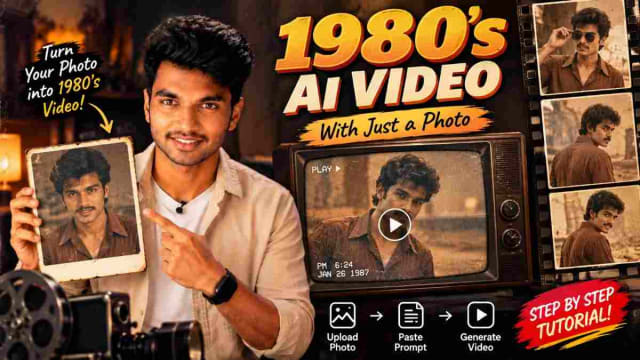
SCROLL DOWN FOR PROMPT
AI videos are becoming more and more popular on instagram, youtube shorts, and other social media. Have you seen cool trending AI videos and thought how are they made? Well now you can make cool ideas similar to them with google flow AI using photo reference!
It's super easy and anyone can do it even with no video editing experience. All you need is a good prompt for the Google Flow AI, and you can create a cool concept from a regular photo.
What is a trending AI Video?
A trending AI video is a short-form video created or edited with artificial intelligence technologies. This could include cinematic movements, creative environments, dynamic transitions, and more!
The cool thing about AI is you can test out ideas without having to film and edit every single idea yourself. A good prompt will describe what you are looking for in your video: subject, camera angle, environment, lighting, facial expressions, and video style.
How to Make AI Video with Google Flow
To make your own google flow AI video all you need to do is first open up Google Flow and make a New Project.
After making the new project, upload a photo that you would like to use as a reference. Something that has a clear subject and isn't blurry will help the video look more consistent
Then you will want to add your prompt. The prompt should clearly state what you are looking for in your video. This could include camera angle, environment, lighting, facial expressions, natural movements, and more.
All you need to do after is click the generate button and wait for the AI to create your video!
Why AI Video Prompts are Important
Your prompt is one of the most important parts of creating an AI video. Instead of just writing "cinematic video" you can add more details to make your video look more realistic or unique
Some ideas include describing:
| Prompt Element |
|---|
| The subject and what they look like |
| Camera angle |
| Camera movement |
| The environment |
| Lighting |
| Facial expressions |
| Natural movements |
| Length of the video |
| Aspect ratio |
| Cinematic style |
The more detail you can give the better chance the AI will give you what you are asking for in your video!
Create Viral Style AI Content
Now that you know how to make a basic AI video with Google Flow let's try out some different ideas. You can use Google Flow AI to make cinematic scenes, lifestyles, creative transitions, travel videos, friendship videos, fashion ideas, and much more!
The most important thing is you want to keep the visuals interesting but also include enough information so the AI knows what to generate.
Some tips include using a clear photo reference, not using too many complicated instructions if you're making a 10 second video, and double-checking your video before uploading.
Get the Trending AI Video Prompt
Google Flow is super easy to use. Just open the app, make a new project, upload your photo, paste the prompt, and generate the video!
prompt
✨ AI PromptCreate a cinematic 9:16 vertical commercial using my provided photo as the identity reference for the main male character. Preserve my exact facial identity, facial structure, skin tone, hairstyle characteristics, beard/facial-hair characteristics, body proportions and recognizable appearance throughout the entire video. Do not morph my face, change my identity, or introduce a different person. Recreate the visual language, shot progression, camera choreography, framing, pacing, transitions and cinematic feeling of the reference video, but replace the original actor with me. STYLE:Premium Indian cinematic commercial, nostalgic 1980s Bombay-inspired cinematic aesthetic, sophisticated retro Indian action-film and fashion-commercial feeling, warm golden-hour color palette, dusty atmospheric environment, subtle 35mm film grain, realistic skin texture, natural film softness, atmospheric haze, practical lighting, shallow depth of field, anamorphic-style highlights, natural motion blur, rich contrast, slightly faded analog film colors, warm amber highlights, muted earthy shadows and realistic period detail. The entire video should feel like a real expensive cinema production photographed on 35mm film in 1986 Bombay. Avoid any obvious AI-generated appearance, CGI look, excessive sharpness or modern digital cinematography. WARDROBE:Dress me as a stylish 1980s Bombay cinematic hero. Dark brown vintage leather jacket, slightly worn but premium leather texture, open cream/off-white shirt underneath, faded blue high-waisted straight-leg jeans, dark brown vintage leather shoes, classic metal wristwatch and large dark aviator sunglasses. The silhouette should feel authentic to the late 1970s/1980s Indian cinema era: masculine, relaxed, stylish and slightly rugged. Keep the exact same wardrobe, hairstyle, beard, sunglasses and accessories consistent across every shot. Do not randomly change clothing between scenes. AUTOMOBILE:Use one consistent black classic vintage automobile throughout the video. It should resemble a late-1960s/1970s American-style classic muscle/fastback car with a long black hood, glossy black bodywork, chrome grille, chrome bumper, round headlights and realistic vintage mechanical details. The exact same car must appear in every shot where the automobile is visible. Maintain consistent body shape, proportions, paint, chrome details, wheels and reflections. SETTING:Authentic Bombay, India, circa 1986. Historic colonial architecture, old Bombay streets, weathered stone buildings, vintage taxis, classic automobiles, red-and-cream double-decker BEST buses, old cafés, period storefronts, pedestrians in authentic 1980s Indian clothing, Arabian Sea waterfront and hazy Bombay skyline. Do not show modern Mumbai architecture, modern vehicles, smartphones, LED signs, modern advertisements or contemporary clothing. SHOT-BY-SHOT SEQUENCE: SHOT 1 — 0:00–0:01.6 Wide cinematic establishing shot of Bombay waterfront during golden hour. Camera is positioned slightly elevated above the coastal road, looking toward the Arabian Sea and the hazy Bombay skyline. The low setting sun dominates the background and produces an intense warm orange-gold glow across the water. The sea reflects the sunlight in a long shimmering path. A vintage red-and-cream Bombay double-decker bus travels naturally along the waterfront road. Period pedestrians move along the promenade. Vintage vehicles travel through the road. Camera performs a slow, elegant sideways/forward tracking movement with subtle parallax between the waterfront, road, bus and skyline. The environment should feel hazy, warm and nostalgic. Use realistic atmospheric perspective, subtle lens flare, soft highlight bloom and authentic 35mm film grain. The opening frame should immediately establish the time period as 1986 Bombay. SHOT 2 — 0:01.6–0:02.9 Cut directly to an intimate interior car shot. I am driving the same black classic automobile. Camera is positioned low inside the car near the steering wheel, looking slightly upward toward me. Frame me from approximately chest-up. I wear dark aviator sunglasses, a dark brown leather jacket and cream/off-white shirt. My wavy dark hair is illuminated by the warm sunlight entering from the side/rear. One hand rests naturally on the steering wheel. I maintain a calm, serious and confident expression while looking toward the road. Camera performs a very subtle cinematic push toward my face. The windshield and Bombay environment behind me are heavily defocused with creamy bokeh. Warm sunlight creates a golden rim around my hair and shoulders. The car should have realistic interior materials, steering wheel texture and subtle vibration from movement. My face must remain perfectly consistent with the supplied reference image. SHOT 3 — 0:02.9–0:03.8 Extreme macro detail shot. Show my hand gripping the steering wheel while driving. My vintage metal wristwatch is the visual focus. Camera is extremely close to the wristwatch, hand and leather steering wheel. Show realistic metallic reflections on the watch, realistic skin texture and detailed leather texture. Begin with sharp focus on the wristwatch. Perform a slow cinematic rack focus toward my blurred face in the background. Warm sunset light creates small highlights on the watch and steering wheel. Use extremely shallow depth of field, realistic optical bokeh and subtle 35mm film grain. The movement of the hand should be natural and minimal, with subtle vibration from the moving car. SHOT 4 — 0:03.8–0:05.1 Cut to a dramatic low-angle automobile beauty shot. The same black classic vintage car drives through an old Bombay street. Camera is positioned extremely low near road level, close to the front-left side of the vehicle. Emphasize the long black hood, chrome grille, round headlight, chrome bumper, front wheel and glossy black paint. The car moves naturally through the frame while the camera tracks alongside it. The front wheel rotates realistically. Warm sunlight produces moving reflections across the glossy black paint and chrome. Historic Bombay buildings appear behind the vehicle with shallow depth of field. Include period taxis, pedestrians and authentic street details in the background. Camera movement is smooth and deliberate, like a high-budget automobile commercial. Natural motion blur should occur around the moving wheels and background while the car itself remains sharp. SHOT 5 — 0:05.1–0:07.4 Cut to a low-angle full-body fashion shot. I walk confidently beside the same black classic car through an old Bombay street. Camera moves backward smoothly in front of me at approximately my walking speed. I wear the same dark brown leather jacket, cream shirt, faded blue jeans, dark leather shoes, vintage wristwatch and aviator sunglasses. While walking, I casually adjust the front of my leather jacket with my hands. My posture is relaxed, confident and charismatic. My facial identity must remain exactly consistent with the supplied reference photo. The camera maintains a slightly low heroic perspective. Historic Bombay architecture, vintage taxis, pedestrians and old vehicles appear behind me. Warm golden sunlight creates a subtle rim light around my hair and shoulders. Natural cloth movement, realistic walking biomechanics and realistic shadows. The shot should feel like an expensive 1980s Indian movie hero introduction. SHOT 6 — 0:07.4–0:08.4 Create a natural cinematic transition using a vintage Bombay BEST double-decker bus. A large red-and-cream 1980s double-decker bus passes extremely close to the camera. The bus moves rapidly across the foreground and progressively fills the entire frame. Because it is extremely close to the lens, the bus becomes heavily motion blurred. The red and cream bodywork completely covers the screen for a moment. Use this physical foreground object as a natural wipe transition into the next café scene. Do NOT use a digital transition or artificial effect. The transition must feel like the camera was physically filming the bus passing directly in front of the lens. Maintain warm vintage 35mm film characteristics. SHOT 7 — 0:08.4–0:10.6 Reveal an authentic old Bombay café interior. Large old industrial/colonial windows occupy one side of the café. Strong warm golden sunlight enters through the windows and creates visible beams of light through dusty atmospheric air. Small dust particles float naturally inside the sunlight. The interior contains old wooden tables, vintage chairs, period café furniture, old glass windows and background patrons. I sit alone at a small wooden table. A vintage newspaper and a glass/cup of tea are placed on the table. I initially wear my dark aviator sunglasses. I calmly remove the sunglasses and place them on the table. My movements are slow, natural and confident. Camera starts at a medium shot and slowly pushes toward me. Background characters remain softly out of focus and behave naturally. Use warm practical lighting mixed with golden sunlight. The café should feel genuinely photographed in 1986, not like a modern café artificially aged. SHOT 8 — 0:10.6–0:12.9 Continue seamlessly inside the same café. I sit at the same table reading a large vintage Indian newspaper. The newspaper occupies the foreground and partially covers my face. Camera begins focused primarily on the newspaper. Slowly push toward me while performing a subtle rack focus from the newspaper toward my eyes and upper face. My eyes gradually become the sharpest element in the frame. My aviator sunglasses remain visible on the table beside the newspaper. Warm sunlight illuminates one side of my face and catches individual strands of my wavy hair. The newspaper should have realistic aged paper texture and believable printed columns. Maintain exact identity from the supplied reference photo. Use extremely shallow depth of field, natural optical focus falloff, subtle film grain and warm amber cinematic color. SHOT 9 — 0:12.9–0:14.5 Cut to a rear tracking shot. I walk away from the café through an old Bombay street. Camera follows directly behind me at approximately waist/chest height. My dark brown leather jacket, cream shirt and faded blue jeans remain exactly the same. My wavy dark hair is visible from behind and moves naturally with a slight breeze. I walk with relaxed confidence toward the same black classic car parked ahead. The street contains authentic 1980s Bombay architecture, old stone walls, vintage taxis, motorcycles, pedestrians and period storefronts. Camera follows smoothly without excessive shake. Use shallow depth of field with realistic background motion. Warm afternoon sunlight creates long shadows across the street. As I approach the car, the camera continues tracking naturally. SHOT 10 — 0:14.5–0:15.6 Create a brief cinematic foreground transition. A dark red/black foreground object or passing vehicle moves extremely close across the camera lens. The foreground becomes heavily defocused and fills the frame. Use strong natural motion blur and shallow depth of field. The object physically wipes across the camera to transition into the next shot. Do not use a digital wipe or artificial transition. Maintain the same warm 1980s Bombay visual language. SHOT 11 — 0:15.6–0:16.7 Cut to an intimate profile shot inside the same black classic car. I am driving again. I wear the same dark aviator sunglasses, brown leather jacket and cream shirt. Camera is positioned close beside my face at approximately eye/shoulder level. My profile is sharply focused. Outside the car window, Bombay streets, pedestrians and buildings move naturally as soft motion-blurred shapes. Warm sunset light passes across my face and jacket. My wavy hair catches golden rim light. I look calmly toward the road. One hand remains visible on the steering wheel. Camera has subtle realistic vehicle movement but remains controlled and cinematic. Preserve exact facial identity and facial proportions. SHOT 12 — 0:16.7–0:19.8 Epic cinematic waterfront hero shot. The same black classic car is parked beside the Arabian Sea at sunset. I stand casually beside/leaning against the car. I wear the same brown leather jacket, cream shirt, faded blue jeans, dark shoes, aviator sunglasses and vintage wristwatch. The Bombay skyline appears in the hazy distance across the water. The sun is positioned directly behind me or slightly behind my shoulder. Create a powerful golden halo around my wavy hair and shoulders. The Arabian Sea reflects the orange-gold sunlight. A gentle sea breeze naturally moves my hair and the edges of my leather jacket. I stand with a relaxed, confident posture, one hand naturally resting near the car or inside my jeans pocket. CAMERA:Start with a medium-full hero composition. Perform an extremely slow, smooth cinematic dolly push toward me. Gradually transition toward a medium shot. Maintain elegant composition and strong negative space. Near the end of the shot, I subtly turn my head toward the camera. My expression is calm, confident, masculine and slightly mysterious. The shot should feel like an iconic 1980s Indian movie hero poster brought to life. SHOT 13 — 0:19.8–0:22.9 Final cinematic close-up. Continue directly from the previous shot without changing location, lighting, wardrobe, car or character. The camera continues its slow controlled push toward me. Move from medium shot into a powerful chest-up cinematic portrait. I slowly turn my attention directly toward the camera and hold eye contact. Maintain my exact facial identity from the uploaded reference photo. My wavy hair is strongly rim-lit by the setting sun. The golden sunset creates soft lens flare and beautiful highlight bloom around my silhouette. The black classic car remains partially visible at the bottom/side of frame. The Bombay skyline remains softly silhouetted behind me. Keep the background heavily defocused. End with a strong iconic hero frame. Leave clean negative space in the lower portion of the frame for typography to be added later during editing. Do not generate text inside the video. CAMERA LANGUAGE:Use professional cinema-camera movement throughout: extreme macro photography for detail shots, low-angle automobile tracking, controlled dolly push-ins, smooth backward tracking, lateral tracking, intimate profile close-ups, rear tracking shots and wide environmental establishing shots. Camera movement must always feel intentional, physically realistic and professionally operated. Use realistic lens characteristics, natural focus breathing, realistic motion blur and authentic depth of field. Avoid random camera shake, artificial camera movement or impossible camera physics. EDITING:Fast but elegant cinematic commercial editing. Use hard cinematic cuts between major shots. Use the passing bus and foreground objects as natural physical wipe transitions. Maintain the approximate timing and rhythm of the reference video. Cuts should feel motivated by movement and visual continuity. Do not use flashy digital transitions. Do not use excessive slow motion. Maintain natural motion continuity between shots. LIGHTING:Warm late-afternoon and golden-hour sunlight throughout. Strong backlight and natural rim light. Dusty atmospheric haze. Soft practical interior café lighting. Realistic shadows. Natural lens flare and subtle anamorphic highlight bloom. Maintain consistent cinematic exposure between shots. Avoid artificial neon lighting or modern digital lighting. COLOR:Warm vintage Indian cinema color grade. Amber, cream, muted reds, earthy browns, faded blues and deep natural blacks. Slightly faded analog film colors. Subtle 35mm film grain. Natural skin tones. Soft highlight rolloff. Rich but restrained contrast. The final color grade should resemble an expensive 1980s Indian film photographed on high-quality 35mm stock. IDENTITY CONSISTENCY — CRITICAL:The person must remain ME throughout the entire video. Use my supplied photo as the primary facial and identity reference. Preserve my exact face, eyes, eyebrows, nose, lips, jawline, facial proportions, skin tone, beard/facial hair and recognizable characteristics. Do not beautify my face. Do not change my age. Do not make me younger or older. Do not reshape my jaw, nose, eyes or facial structure. Do not change my hairstyle characteristics. Do not replace my face with a generic Bollywood actor. Maintain identity consistency across every camera angle, lighting condition, expression and shot. WARDROBE CONSISTENCY — CRITICAL:Keep the exact same brown leather jacket, cream shirt, faded blue jeans, dark leather shoes, aviator sunglasses and wristwatch throughout the video. Do not randomly add or remove accessories unless specifically described in the shot. AUTOMOBILE CONSISTENCY — CRITICAL:The black classic car must remain the exact same vehicle throughout the entire sequence. Maintain identical body shape, black paint, chrome details, grille, headlights, wheels and proportions. REALISM:Photorealistic live-action footage. Realistic human anatomy. Realistic facial expressions. Realistic walking and driving biomechanics. Realistic motorcycle/car physics. Realistic cloth and hair movement. Realistic reflections on glass, chrome, leather and car paint. Realistic sunlight and shadows. Realistic atmospheric depth. Avoid warped hands, extra fingers, duplicated people, distorted faces, inconsistent clothing, distorted automobile parts, floating objects, plastic skin, cartoon appearance, CGI appearance, excessive HDR, oversharpening, artificial bokeh, unstable backgrounds, flickering, jitter, facial morphing, identity drift or AI artifacts. The final result should look like a high-budget Indian cinematic advertisement starring me, faithfully recreating the reference video’s visual choreography, camera language, pacing and nostalgic 1980s Bombay atmosphere while using my exact face and identity.
Conclusion
How was your experience creating a trending AI video with Google Flow? It was super easy right? Just a good photo reference, a cool idea, and a well-written video prompt. Google Flow can be used to create cool content for Instagram Reels, YouTube Shorts, or even just for fun! Use different prompts, styles, angles, and more to find what looks best for your social media content and video needs.
dinxsh7
EditorEditorial contributor researching practical guides, tech discoveries, and curated recommendations for Dinesh Picks.
Continue Reading
Recommended Stories
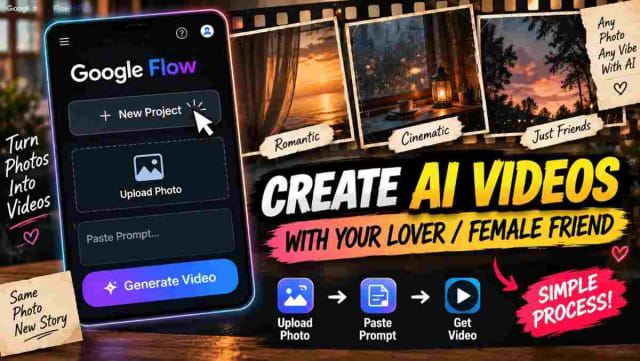
Google Flow AI Video Prompt To Create An AI Video With Your Lover Or Female Friend
Create a viral-style AI couple video with Google Flow using your photo and your lover or female friend’s photo. The process is simple: open Google Flow, start a new project, upload the person’s photo, and paste the provided AI video prompt. In just a few steps, you can generate a creative and cinematic AI video. Comment
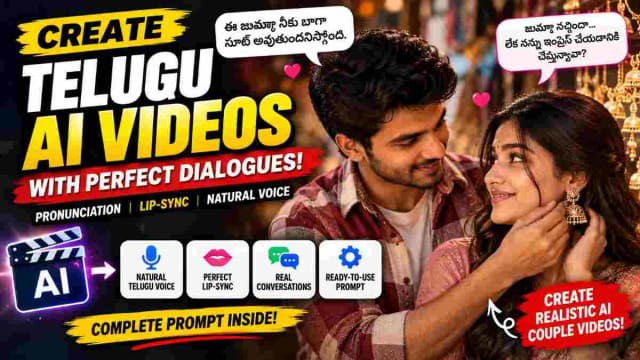
Telugu AI Video Prompt for Natural Dialogue & Perfect Lip Sync
Create realistic Telugu AI videos with natural Telugu pronunciation, conversational voice delivery, and accurate lip-sync. This guide explains how to use a detailed Telugu AI video prompt to create realistic conversations, improve pronunciation, add natural pauses and ensure the correct character's mouth movements match the spoken dialogue.